

Basically, tea rooms are build for Chaji. As you could read on ‘What is Chaji?’ page, Chaji has very deep philosophy.

To enjoy the taste of matcha is the main purpose of tea ceremony, so tea rooms should follow that idea; let guests concentrate to the taste of matcha. To let them do that, tea rooms should build as simple with non wasting furnitures.
It is said as over 90% of sense is occupied by sense of sight, thus every useless and bothering visions should be removed from guests’ sight to concentrate. Even though, tea rooms should equip at least beauty without futility, so the builder of tea room should think about how to remove unuseless beauty.
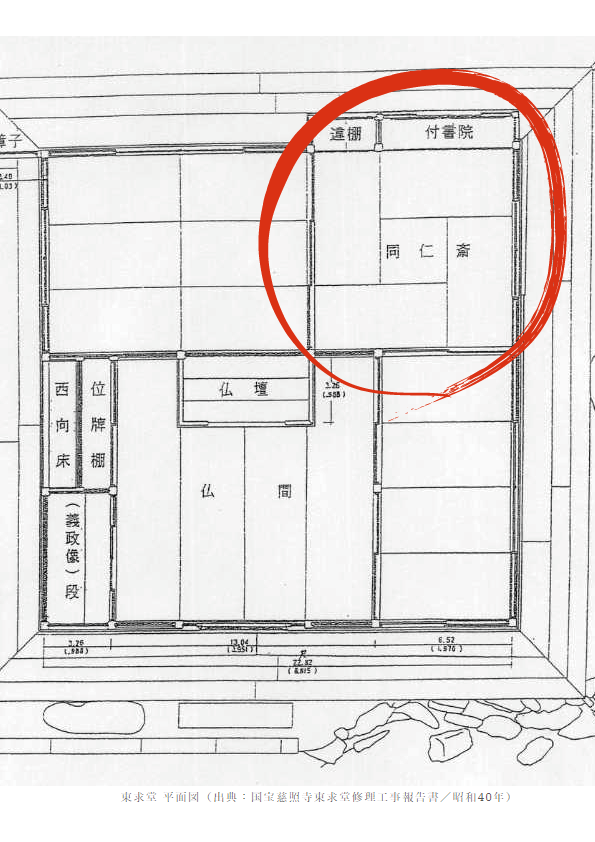
The basic style of tea room is designed by Juko Murata in beginning of 15th century which was 4.5 tatami room. The original idea of four and a half tatami room was found in Ginkakuji temple, he had been inspired from that room as to set it becomes the basic tea room because it had fit to his philosophy; not too big and not too small.
The era passes, the God of tea ceremony, Rikyu Sen, have started to build smaller tea room with 3 tatamis or 2 tatamis to express much more Wabi (poverty style). Rikyu have left his word; ‘家は漏らぬほど、食事は飢えぬほどにてたる事なり(Ie ha moranu hodo, shokuji ha uenu hodonite taru koto nari; House is enough with non leakage from the roof, food is enough if you don’t die with hunger)’. In the thought of Zen and Wabi, they teaches us that living is happiness evenif you are not fulfilled.
我只知足 (ware tada taru wo shiru; Now I found that i’m happy enough to just alive) is the keyword of Zen and Wabi thoughts, therefore Rikyu have started to re-design tea rooms as it be enough to treat his small number of guests. If the guest is only 1 person, the room don’t need to be big because the wideness is waste to concentrate to the taste of tea. Rikyu’s design have effected by that thought, thus he gave up 2.5 tatamis and left only 2.
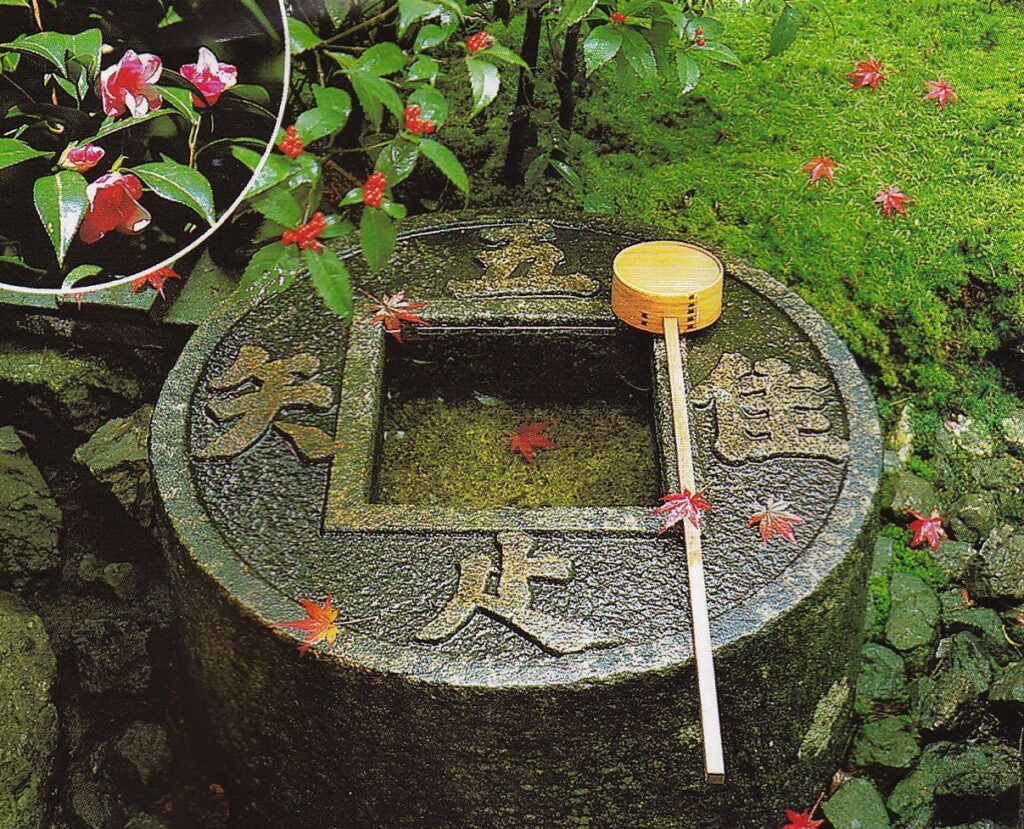
Rikyu’s idea was so stunning for every lords and shogun at that days. Many of them tried to imitate Rikyu’s idea, but his idea was too unique as they try to do that. They couldn’t put their thought into the design of tea room, but only Oribe Furuta, Rikyu’s highest disciple, and Ensyu Kobori, Oribe’s highest disciple.
Rikyu’s tea room used to be with dim light, so Oribe tried to make it a bit brighter and he also tried to put some good idea into his Chaji as to role up the outside screen when the Usucha session started. Ensyu also succeed to design his own tea room as make it much brighter as it can open the door to gurantee the garden scape view.
Basical tea rooms have 3 kind of ceiling which are 真(Shin, highest classed), 行(Gyou, middle classed), 草(Sou, lower classed). Rikyu told ‘真を知り、行・草に至ればいかほど自由にくずそうと、その本性はたがわぬ (After understanding Shin, reach out Gyou and Sou. Then you can keep essences even you create anything you want.’
Usually it looks everything begins from the lower classed thing, and it is true. Unfortunately, many people take it easy as they feel that they understood everything through understanding only Sou. They don’t notice that they haven’t reach out Shin because their understanding is very superfacial, so Rikyu have put 3 kinds of ceiling into one tea room to let them understand we really need to reach Shin to understand core essences of the way of tea.
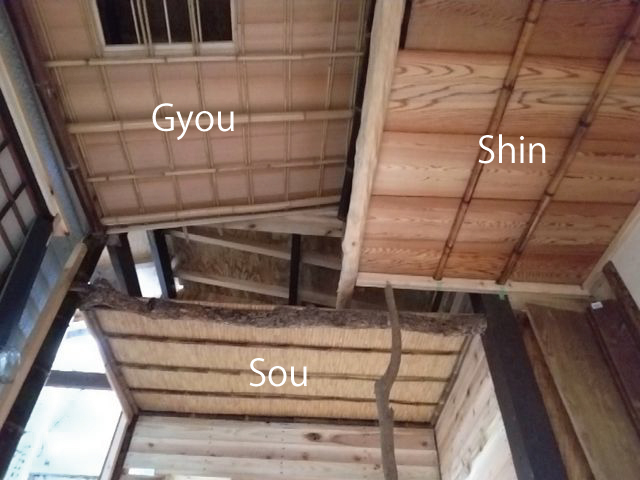
Shin ceiling is installed onto above where main guest sits, Gyou ceiling is installed onto above where last guest sits, and Sou ceiling is installed onto above where the host sits.
There are also 3 classes of Japanese tea rooms, of course they are called Shin, Gyou, and Sou. Shin tea rooms are very formal and rich, Gyou tea rooms are bit informal than Shin to let people relax. Sou tea rooms are build as a symbol of deep understanding.
Begnning from Sou, grow up to Gyou, reach out Shin, and they finally can understand depth of Sou after understanding the core and the essence of Shin. This idea is what Rikyu tried to teach us about Zen tea. In fact, some of very luxury people give up his rich life and start to enjoy poviety life in these days, this shows their mental development ave been acchieved the essence of Shin.
Poviety tea room is the symbol and teaching of Rikyu’s achievement. When you visit tea room, please find Rikyu’s thought.