

The most traditional secret tea function
Chaji is the most authentic style of tea ceremony; so called chaji (tea function). In Japanese, we have some “Ji (事: thing, function, event)” words such as ‘Shokuji (食事, mealing)’, ‘Keiji (慶事, celebrating)’, ’Saiji (祭事, gods festival)’, ‘Kokuji (国事, national affairs)’, and Chaji (茶事, tea function). Japanese people use “Ji” word in sacred meanings when it is closely related to our lives like above. This means chaji is also a sacred and special function for us, so chaji have to be proceeded very ritually.
Preparation
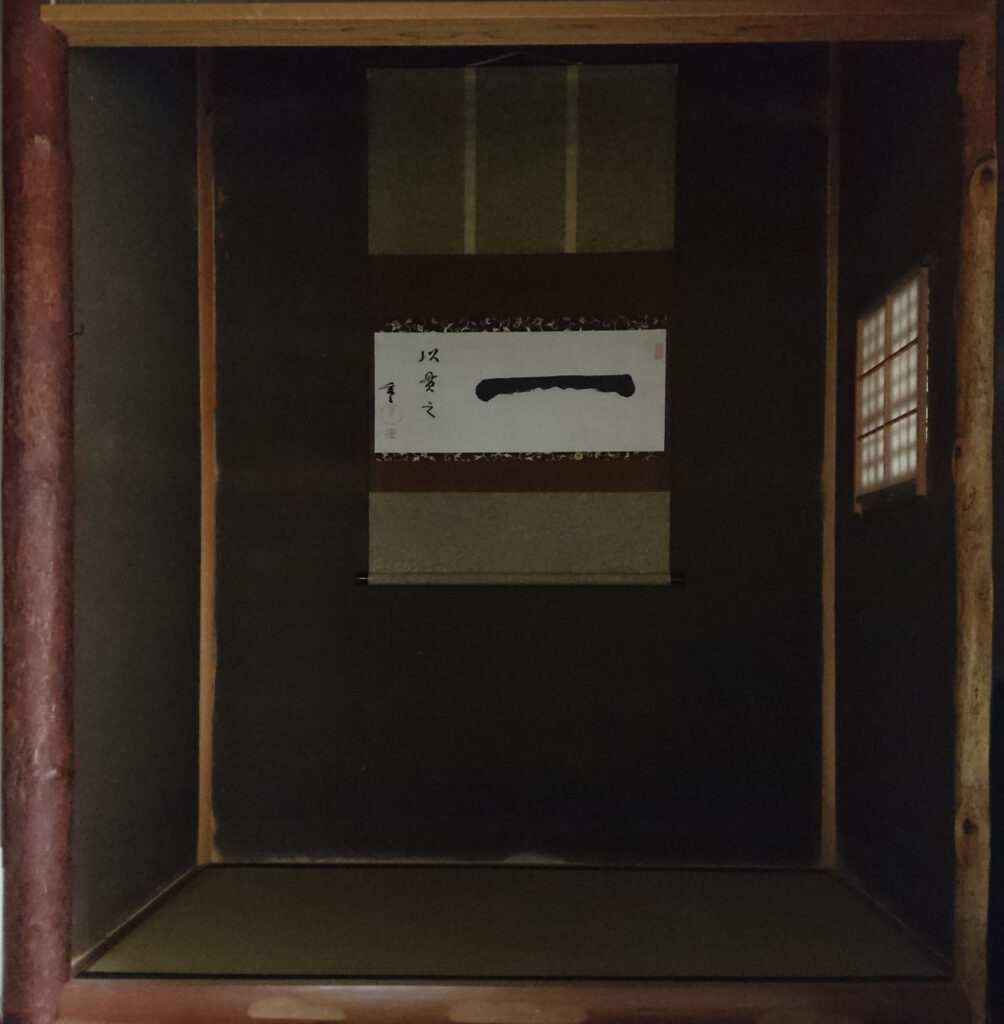
Preparation of one chaji takes very long time. One preparation takes 1 week at least (over 2 weeks, generally 1 month). It starts from washing charcoals by water at first to let them not spark and smell bad, then I have to dry them for 4 days at least.
While drying charcoals, The theme of the chaji with choosing Bokuseki (墨蹟, calligraphy of zen thought written by high priest or iemoto) scrolls is considered. The meaning of calligraphy becomes the theme of the chaji, and it is one of very important traditions of tea ceremony.
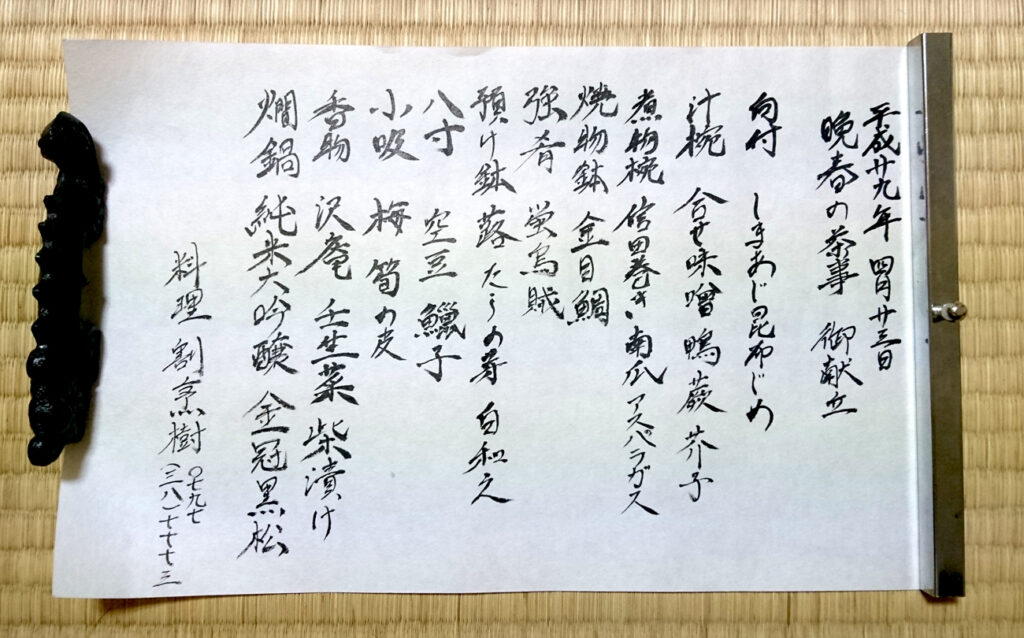
After theme is set, tea wares following the theme and their each design are planned. At the same time, The writing the bill of fare is started with discussing with a chef.
While preparing each chosen tea wares, natural water for the chaji is taken from a well in Ashiya city. Water is so important as matcha for my tea ceremony, because water changes every tastes. We, human beings, are constructed from hydrogen for 60&, oxgen for 20% and carbon for 20%. The chemical symbol for water is H2O (Hydrogen and double oxigen), which means water shares 80% of our body. Thus choice of water is really important in a tea ceremony in chemical meanings, too. Hence only whom can be particular about water can draw out the taste of tea.
Zen ritual
Tea ceremony is very hard-to-understand culture even for Japanese people. For example, to hold a tea ceremony on their own, they needs much practice for long years as I have already practiced for more over 30 years. One of the reason why it is so difficult, tea ceremony is based on zen thoughts, and we have to understand zen at first. Chaji, the most authentic tea ceremony, can be also said tea function or tea ritual. The host has to understand its every sequences and manners which longs for over 4 hours.
In other words, chaji is also able to said that it is a traditional entertainment only for who understands the meaning of affluent time. It is not only zen ritual event, but also it has delicious kaiseki and rich taste matcha with beautiful antique tea wares.
Hidden entertainment

In ancient days, tea ceremony used to be an entertainment for high society people, and tea rooms were used not only for entertaining but also confidential politic talks. Tea wares of each tea ceremonies were recorded as calligraphy, but needless to say, contents of conversations were hidden.
Interesting point of tea ceremony is the climax of this communication is the taste of tea. If the taste of tea become clumsy, it means host has unfaithfulness in his mind. If guest’s behavior is something wrong, it means he is insincere. Tea ceremony is very useful to finde out each other’s inside mind in their talk and manners; this is similar to a match of chess.
By the way, chaji was thought that is very difficult to understand its value for people who don’t know about tea ceremony. Even now, the beginners of tea ceremony are not allowed to join any chaji, because each manners are too difficult for them as only 1 of 100 students have experienced chaji.
Not only that, most of tea ceremony students are too shy to introduce their own proud culture and also they can’t explain them in foreign language. Especially zen thoughts that have hidden inside of hosts’ each forms are still very difficult to explain. To introduce chaji, we have to UNDERSTAND zen at first, and that is the most difficult part for every tea ceremony students.
For those reasons above, chaji was hidden from foreign people till these days, but I started to try to introduce this high society culture to foreign people now. Still I am the ONLY ONE who is introduce real zen chaji to foreign people as very PRIVATE tea entertainment with remaking that as amateur people can enjoy.
The contents of chaji
As “What is chaji” page introduces, chaji is constructed with 5 parts, Sumi-demae (炭点前, the manners of putting charcoals), Kaiseki (懐石, kaiseki cuisine), Nakadachi (中立, the intermission), Koicha-seki (濃茶席, the koicha term), and Usucha-seki (薄茶席, the usucha term).
Sumi-demae is most important part for host because of it controls whole passage of chaji. If the temae didn’t work well, charcoals will not burn well; it means water will not be boiled moderately. In a sense, Sumi-demae is the most difficult part for host in every chaji. It will take 10 to 15 minutes to finish.
Next term is Kaiseki or tenshin (simplified kaiseki).
Shozumi, Putting Charcoal Session
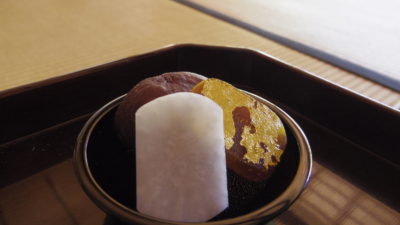
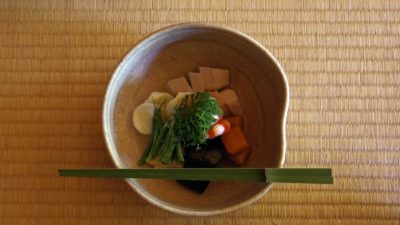
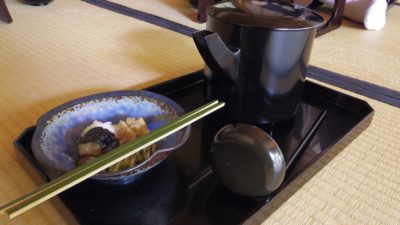
Kaiseki Cuisine
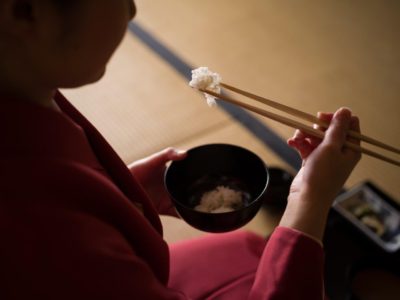
Kaiseki cuisine is a meal that is served while in chaji, and it has become the standard of Japanese food culture. It is free from free from degrading the original taste of materials, the taste appears the great depth of Japanese culture and tradition that was grown by the people who lived together with nature.
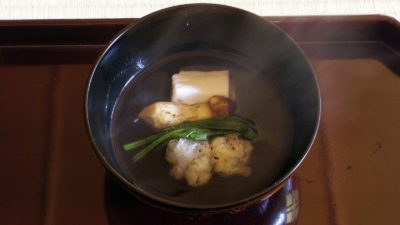
Basically, Kaiseki cuisine is light in taste. By taste slowly with most appreciate, you can find deep taste of the material. Kaiseki cuisine is originally made with idea of Zen, it teaches us that we should not live only with loving display or good looking, but by return to human-nature. Through Kaiseki’s 1 soup 3 side dishes, your stomach condition will be best to ready for taste Koi-cha (thick tea). Nowadays, Kaiseki contains 2 soup 5 side dishes with sake and ancient style snacks.
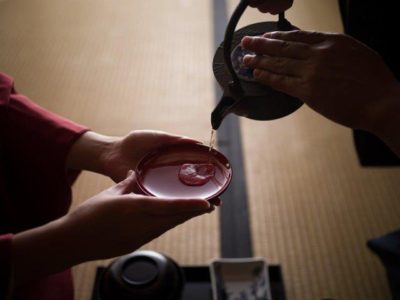
Actually, It is very difficult to cook kaiseki for tea ceremony as only 1 of 1000 Japanese cuisine chef is able to cook. Controlling the taste of kaiseki cuisine is also very difficult and important to maintain the theme of a chaji, so the tea master of Chabito, Sougo Kobayakawa, always trains his sence of taste to make order to the chef who prouds himself strongly as he usually denys order from the other people.
Chefs always obey to the master’s sence of taste. In our chaji, you will witness only perfect taste makes the tea ceremony perfect.
Meals
Kaiseki cuisine is a full-course served through 1.5 to 2 hours. In the kitchen, the tea master checks every dishes’ taste, and make order to chef everytime to maintain the quality of a chaji. The boiling level of rice, the taste of soup, the cook level of fish…everytime tea master checks each level, chef’s performance reaches out 100% at the first time. In other words, kaiseki served in a chaji of Chabito is VERY top of the world.
Kashi, Japanese cake
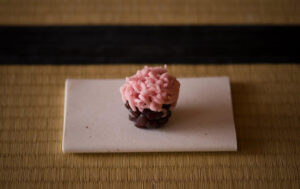
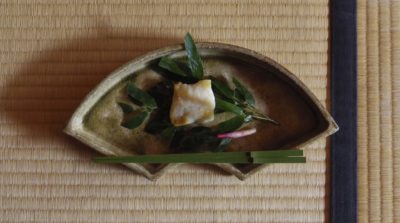
As a desert of Kaiseki cuisine, you will have a Japanese traditional sweet. It shows us Japanese people have many kind of fun in each seasons. the kashi is made by a pastry chef throughout the consult with the tea master. The designing of form and taste is checked strictly, the originally designed kashi is served for you.
The Kashi draws you to ancient traditional world with its seriously checked sweetness.
Nakadachi, intermission
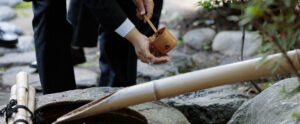
Nakadachi is an intermission between Kashi and Koi-cha. While then, the host makes preparation of Koi-cha term and Usu-cha term to clean the chamber and path. The manner of koicha session is lectured while in nakadachi.
The end of the intermission is called by Japanese ancient gong. The sound of gong will tences the atmosphere, and the atmosphere becomes the announce very climax of this chaji.
Koicha Session
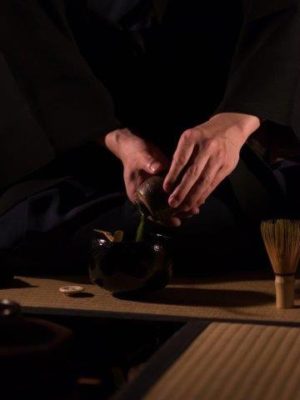
Koicha, the thick matcha, is often compared to espresso. This is very climax of a chaji, it is also pronounced main dish. Koicha term is the time of most luxurious. It actually tenses host very much, because this term is the biggest point of host’s hospitality.
Koicha is quite thick. The bitterness of koicha has indescribable sweetness and very aromatic flavor. In the silent pregnant with tension, koicha’s taste is excellent bliss. The aromatic bliss will spread in your mouth, stomach, and nose.
Usually making koicha is quite difficult as even over 50 years trained people cannot make it perfect. Very good teacher and very good training of making matcha and zen thought trough long years are neccesary to draw out the potential of matcha. To make koicha perfect, preparedness of risking host’s own life is needed, too. Without those resolution, potential of matcha is not be able to drawn out.
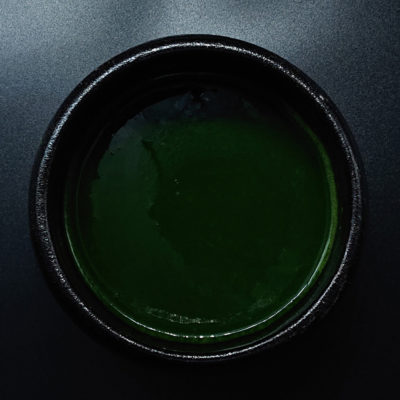
Making one’s self ‘nothing’ by host is very important when making koicha. Putting matcha into chawan (bowl), picking up chasen (tea whisk), then become ‘nothing’. This is the most significant procedure of making koicha, and matcha never shows its potential if the ‘nothing’ is not enough. Tea ceremony is not only ‘the lesson of manners’, but also training each one’s self based on zen thought.
100% drawn out koicha spreads its noble sweetness and elegant aroma into your mouth. Rikyu Sen, the holy master of tea ceremony, have designed chaji as it becomes the perfect entertainment through enjoying koicha’s taste in 450 years ago.
The tea room is set with dim light, and the tense of room focus your sence to feel, taste, and enjoy a cup of koicha. This is very main dish of a chaji.
Gozumi, Adding Charcoal Session
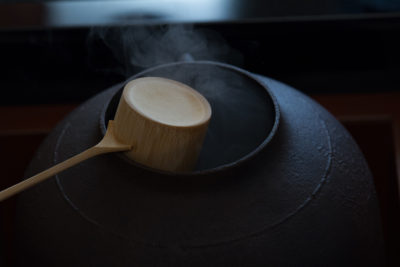
It’s been already 3 hours since the chaji started, and charcoals are almost burned out. There are still Usucha session is left, so charcoals should be added. The adding process is also constructed as a manner of tea ceremony, this is called Gozumi temae. Not only charcoals, but also water is added into the kama (kettle).
Burned charoals are reboothed, used hot water is added, now everything is ready for the final session.
Usucha Session
The most popular matcha’s correct name is Usucha. The usucha is served after Koicha as a desert of Koicha session to hydrate your throat with its light taste.
The highlight of this session is host’s natural body moving. He uses his body core instead of shoulder and arms to maintain his zen ‘nothing’. He thinks about himself as he is the lowest classed tea ware, he omits useless or unnecessary movements to pay high respect to each tea wares which are saved and maitained for long years.
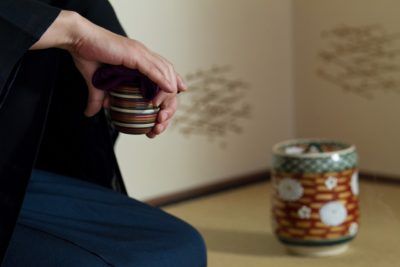
The difference is found especially when the host makes matcha. Most of all tea masters scrach bottom of tea cup by chasen (tea whisk) when they whisk, but Chabito doesn’t. Most of all tea masters need to grab chawan when they whiskes matcha, but Chabito doesn’t. Most of all tea masters don’t care about the sound of pouring water into something, but Chabito does to represent the natural water spiring. This strict style shows how professional Chabito is.
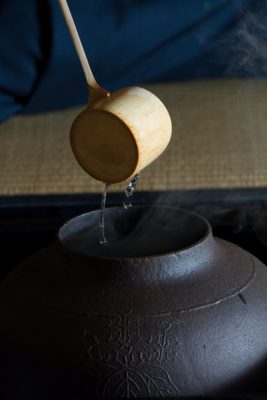
Chabito thinks matcha is the highest classed tea ware. When he scoops, he doesn’t put ‘into’ the cup, but he puts ‘onto’ the bottom of chawan (tea cup) softly. This means he trys not to stress matcha.
Even while he is making Usucha, he doesn’t forget to entertain guests for their joy. ‘He just shows the traditonal culture’, ‘She just makes matcha well’ are not good ehough idea to entertain the guest. Chabito proudly introduce you the ultimate hospitality room as trancesending time-space through over 5 senses, watching, touching, smelling, listening, tasting, and more.
Usucha deserves to the conclusion of a Chaji. This is very ultimate matcha entertainment, and the heart of tea ceremony. Koicha session was very serious and silent, vice versa Usucha session is frank and reluxing. This contrast is also one of the feature of a Chaji, and it will really take you back to 450 years of history.
See Off and Farewell
When Usucha session finishes, the procedure of your Chaji is closed. Guests will leave from the tea room, and the host will see off them.
From the begenning till seeing off, 5 hours of your remarkable experience will be not just experience, but it’s gonna be written in a page of your life. Please feel and enjoy a Chaji which is tottaly prepared only for you, and get a memoriable recollection.