

Outline
Tea ceremony, the way of tea, is one of the most popular traditional cultures in Japan which is also well known in whole world. Perhaps, the history of it is not known well even in Japan.
Tea ceremony used to be called as “Chanoyu” but not “Chado (Sado)”. It was gents’ culture till the end of Edo period, but it started its style to ladies’ culture since Meiji era. The history have made by time passage of Japan and tells us the reason why CHABITO started our business throughout tea ceremony.
The history of tea
Importing tea to Planting tea
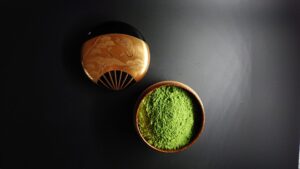
Usual tea has its variety, and it is known as ‘Matcha’, ‘Weak fermented tea’, ‘Strong fermented tea’, ‘Roasted tea’. Matcha, Sencha, Houjicha is known as Japanese traditional tea style, and fermented tea are Pu’er tea, Ooolong tea, English tea and so on.
Japanese very first record of tea is written when in Nara period (AD592-784). Matcha style was not descovered and tea used to be imported from Tang dynasty then. Matcha style tea was not invented yet in those days, Chinese sencha style tea were imported to Japan. Matcha was invented in Song Dynasty (AC960-1270, Heian to Muromachi period in Japan), and it was gladly exported to Japan.
Japanese planting of tea plant was not succeed till 1312, buddhism priest Eisai was the first person to did it with importing the thought of zen and its manners. Until then, every kinds of tea were imported from Sui, Tang, Song Dynasty, so it was hardly to buy for common people in Japan expect noble or very very rich people. After succeed of planting, tea started to expand in usual rich people.
Forming tea manners
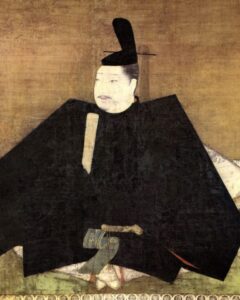
There was a fancy samurai named Douyo Sasaki in late Kamakura to eary Muromachi period. He found unique beauty from medicine caddy and medicine bowl, he chose them to use for tea caddy and matcha bowl. He also started a game of tasting matcha called ‘Toucha’ with manners and forms of zen from priests, and it became the origin of tea ceremony which longs till these days.
Douyo was also known with his hospitality. When his enemy, Masashige Kusunoki, have raided Kyoto, Douyo found he would loose that war. He orderd his minions to stay in his house and welcome Masashige and treat him very well with meals, sake, flower arrangements and matcha. Masashige said “I have won this war, but I lost this game’. The entertaining culture which have formed by Douyo are well known with its fancy, his favorite wares tells us how fancy he was through watching tea wares he left to these days.
Especially Karamono (imported wares from old China) are still treasured as they have their own manners, those sence of value is made by Douyo Sasaki himself.
Wabicha (the poverty style of tea ceremony)

Late Muromachi period (15th century), Kyoto was under fire. One of most popular zen priest, Soujun Ikkyu, was born in the Kyoto under fire, many natural disasters, and riots, His reputation is grown by his awaken thought and his jobs, he also became the 48th top priest of Daitoku-ji temple.
His zen style is very unique as he held a sword even he is a priest. When he draws the sword from sccabard, it was just a wooden mock sword. Ikkyu said
‘How good it “looks”, there are no meanings if the contains doesn’t accompanied by its “looks”. ‘
Every new years day, he walked cities around with putting a human scull onto his keen, and he also said
‘New year’s decoration is also the every year’s sign of path to death (getting older), cerebration is good, but it’s not good, too.’
Many common people became fans of Ikkyu because of his uniqueness. Juko Murata was most well known person who was inspired by Ikkyu’s zen, he became a disciple of Ikkyu to learn his zen. Juko’s inspiration have became a paradime shift of tea ceremony which used to be fancy and rich. He told that much more spiritual beauty inside can be found from broken or miscellaneous tea wares, it became the origin of value of Wabicha.
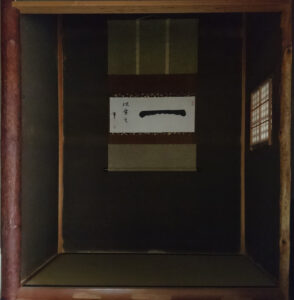
Juko said
‘These days, many people say “Hie Kareru (cold and wither)” with handling Bizen or Shigaraki pottery and they proud themselves as exparts of tea cremony, but that is nonsense at all. The true “Kareru (wither)” is the word which comes from the person’s awaken through his hard training of having, loving, knowing good (fancy) things, and also finding the emptiness of material wealth with reaching the stage of greatness of spiritual abundance. On the stage of spiritual abundance, we need no fancy and rich materials and we will find just having simple and rustic life is enough to live. This is “Hie Kareru (cold and wither)”.’
His words shows and tells us the core of Wabicha (poviety style tea ceremony), and his saying ‘茶禅一味 (Chazen Ichimi, tea and zen are same)’ have become one of the biggest effects in tea ceremony history.
The completer of Wabicha
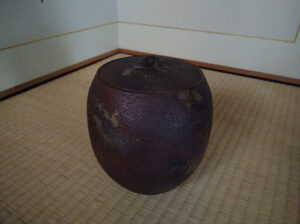
The value and sense of povity style was named ‘Wabicha’ by Jouoh Takeno who is a disciple of Juko’s disciple. He also defined Wabicha by using a song,
‘There is no more flowers and beautiful leaves, but just sunset of deep Autmun with rusty thatched small house on bay are left’
The value of Wabicha started to spread through that clear explanation.
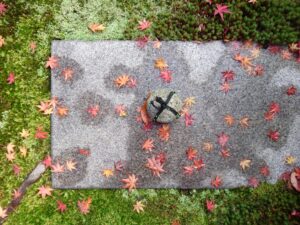
One day, a new disciple have come to Jouoh. His name was Yoshiroh Tanaka (late Rikyu Sen). Jouoh have tested him to clean the garden witch is already cleaned perfect, and Yoshiroh shook maple tree and let leaves fall. Yoshiro told Jukoh that he completed the cleaning, and Jukoh was surprized with Yoshiro’s sense of beauty. This legend shows Yoshiro would be a great master later even he was just 17 years old (the other theory says Yoshiro didn’t learn from Jouoh but from Gensai Tsuji).
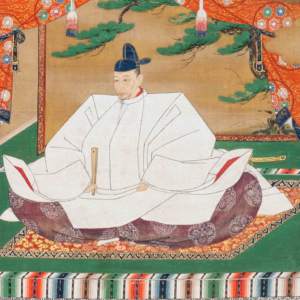
After several decades, Muromachi era was finished and Azuchi Momoyama Era had been started by Nobunaga Oda and he once ruled whole Japan. One of sponcers of Nobunaga was grown Yoshiro, Soueki Sen (Rikyu Sen). He became one of 3 head masters of tea ceremony (the other were Soukyu Imai and Sougyu Tsuda), and already have had high reputation as Hideyoshi Hashiba, who would be later chief adviser to the Emperor, was disciple of Soueki.
Soukyu Imai and Sougyu Tsuda were richest people in whole world as some says they were richer than Rothschild family, but Soueki was just a president of middle class logistics company. Eventhough Soueki was named on 3 tops, this tells us Nobunaga was meritocracy person, and also tells us Soueki’s sense and ability were such great.
Sometimes just only one of tea caddy was traded with a catsle, andy Soukyu and Sougyu had many of them which were liked by Douyo Sasaki. Soueki couldn’t have such a luxury tea wares, so he produced very unique style of tea ceremony treatment. Many lords who didn’t have luxury tea wares were appreciated with Soueki’s idea which don’t need to spend such money.
The treatment of tea function
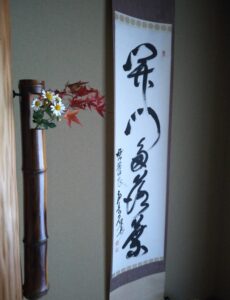
The Chaji, tea function, was produced by Soueki. “Ji” which is contained a word of Chaji means a ritual such like “神事(Shinji, shinto ritual)”, “慶事 (Keiji, ceremonical retual)”, “弔事 (Chouji, moruning)”. One of Japanese people sense which thinks harmony with the nature seriously have made a word, 食事 (Shokuji, meals).
Soueki have produced 茶事 (Chaji, tea function) which includes Shokuji instead of Chanoyu (tea ceremony) or Chanoe (tea meeting). This is the origin of Chabito’s Chaji and tea ceremony.
After death of Nobunaga Oda, Hideyoshi Hashiba renamed himself Hideyoshi Toyotomi when he became chief adviser to the Emperor. He also used tea wares as trading item between him and his enemy, and he even gifted them to his subordinates as his teacher and his lord, Nobunaga did. Becoming a disciple of Soueki Sen was permitted only by Hideyoshi Toyotomi, he used tea ceremony and tea wares as political tool to bring peace into whole Japan. This policy is called “御茶之湯御政道 (Ochano-yu Goseido, whole Japan political unification by tea ceremony), therefore tea ceremony style of Soueki Sen, Hieyoshi’s teacher, have ruled all Japanese tea style since then.
Soueki’s style was not only ruling whole Japan, his Chaji was really unique and touching for many lords and millionares. Masamune Date, a lord who lived in Sendai domain which is 1000km far from Sakai district (Soueki’s home city), had become a disciple of Soueki. It took over 1 month to move from Sendai to Sakai, but Masamune came to Soueki’s place to take a lesson of tea ceremony. This tell us that Soueki’s tea ceremony style was so attractive, charming, enchanting and captivating. Number of Soueki’s disciple was over 200.
Arising Rikyu Sen
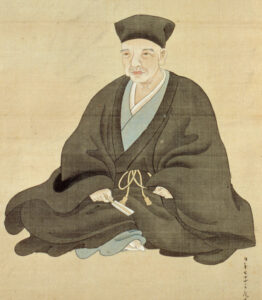
When Soueki have dedicate his tea to the Emperor Ooghimachi, he was given a priest name “Rikyu Sen”. Soueki used to be just a local businessman and it is not permitted to meet the Emperor for that class people. Thus there was an idea that it will be permitted if he became a priest, and he was given a name.
Finally Rikyu Sen, one of the most famous person who is written in history textbook, arised. Most of lords and upper class people looked up Rikyu as a coup d’etat against Hideyoshi’s government was about to happen when he was death punished.
Rikyu’s effect was such great, and his style of Wabicha and tea ceremony has kept arrive till nowadays. The absolute value of Rikyu’s Wabicha became the origin of all Japanese people’s sense of beauty even now.
Rikyu’s black
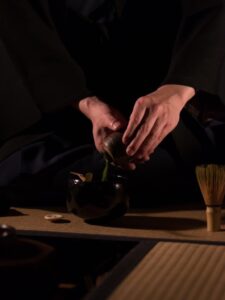
Rikyu left many achievements. He was training zen in Daitokuji temple (see above about Ikkyu), and his awakening was appeared on its favorite colour, black. Kuroraku chawan, the black tea bowl, which Rikyu produced became the highest classed domestic pottery, and it is still the highest class one. Shin-nuri, the black lacquered, also became the highest classed.
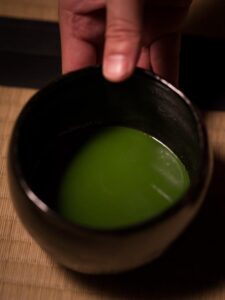
CHABITO has studied that Rikyu have found that every colours born from black and back to black after death. Every colour can’t resist black, and every colour, even white, cannot be brighten without black. To let guests concentrate on the taste of matcha, Rikyu have wiped every colour from tea wares such like tea bowl, only black is left.
This sense of value directly connects to the thought of zen and sense of Wabicha. Wabicha is the sense of value that making love to poviety which tells us ‘getting closer to black is the most easiest way of zen awakening’. 茶禅一味 (Chazen Ichimi, tea and zen are same), is here to become the reality through black tea wares.
Rikyu’s branding
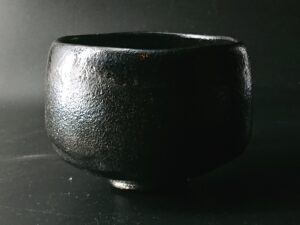
As Rikyu was a businessman, he have produced so many tea wares. His favorite became the most popular taste of Japan, most of lords and wealthy people have tried to get Rikyu’s products. 利休好み (Rikyu gonomi, Rikyu’s favorite) became the very first brand of whole world history; CHABITO thinks.
Rikyu’s faborite is now still on the highest brand in tea ceremony world (except imported treasures), many tea ceremony students hope to have one at least someday. Rikyu brand have begun in 450 years ago, and it is still going on.
Rikyu’s politics
Hidenaga Toyotomi, younger brother of Hideyoshi (the chief adviser to the Emperor), have told a man to ask Hidenaga about diplomacy and ask Rikyu about domestic administration. Rikyu was not only a tea master, but also he was a good politician who have grown Hideyoshi from just a farmer to the leadership of Japan.
There are many records of tea ceremony which purpose was inviting 大名 (daimyo, loads) who have thought against Hideyoshi. This means Hideyoshi ordered Rikyu to negotiate to make peace with his enemies through tea ceremony. Not only that, keeping public relations was also the Rikyu’s duty, he was the fixer of Hideyoshi.
Rikyu’s death
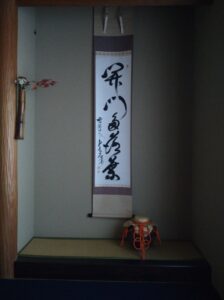
Rikyu was given death punishment from Hideyoshi, there are so many theroeis of its reason. Popular reasons are like below.
1, Rikyu was doing his own business behind his negotiations under the order of Hideyoshi; Rikyu was selling new black chawans (tea bowls) which look no value with very expensive price.
2, Rikyu have made his wodden statue and he put it on Daitokuji temple’s main gate’s rafter room; the Emperor also passes its gate, which means the statue is irreverence to the Emperor.
3, Rikyu’s sense of value is too great as Hideyoshi cannot reach and Hideyoshi envyed too much.
CHABITO thinks those theories are too unreasonable and almost impossible excuses. CHABITO has another theory.
In those days, Spain have already conquered Philippine and the other Europian countries have reached Asia. Those countries were trying to coloniarize Japan through propagation of the Christian faith and millitary power, so Hideyoshi was thinking about how to let them know that Japan is not touchable imperial. The best way is showing own millitary power to the other countries, but there was a big reason why he couldn’t move.
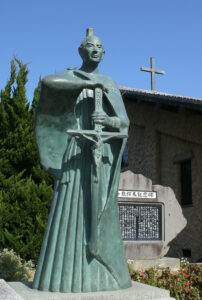
Actually half numbers of daimyos are already converted to Christian, they were waiting for Jesuit to come. But Hideyoshi have prohibited EVERY Christianity of ALL Japan, so many Christian daimyos were planning about coup d’état. Many of them used to be Rikyu’s disciples, so Hideyoshi must ask Rikyu to make peace, keep relationship, reconvert back to Buddhism peacefuly with daimyos.
Eventhough, the Christianity faith of daimyos were enough strong to refuse Rikyu’s offer and some of them hated Hideyoshi so much as they could bring civil war back to Japan. Rikyu’s decision was telling them that their grand teacher (Rikyu himself) was going to die, annoucing them that their opposition were such big problem for Japan through Rikyu’s death. They HAD to reconvert to Buddhism to become one and secure Japan from the invasion of Europian countries.
The true excuse of death of Rikyu
Rikyu was permitted to dead by 切腹 (Seppuku, harakiri, cutting his stomach with katana) even he is just a civilian. Seppuku is a suicide with the highest dignity of Samurais, so civilians are not permitted to do that. This means Rikyu was given his death by Hideyoshi with great respect.
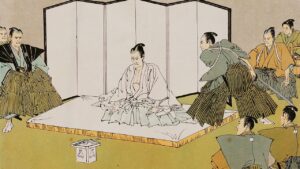
If he is really guilty with almost impossible reasons above, he ain’t be permitted to do seppuku. However, he was. There was far more strong reason why he need to dead as CHABITO thinks.
Only almost impossible excuses above are recorded, but CHABITO also thinks that because death was Rikyu’s choice by himself. If Rikyu didn’t do seppuku, most of anti-Hideyoshi daimyos would do coup d’état. because of prohibition of Christianity. But death penarty needs bad reason like big failues or mistakes, Rikyu was too innocent as he needed to dead even he need to choose death by himself to suppress anti-Hideyoshi daimyos. Thus almost impossible excuses above were atattched.
By announcing his death, rebellion was suppressed without Hideyoshi’s millitary power at all. Daimyos understood Rikyu’s message through his death.
Later days after Rikyu’s death, Hideyoshi decided to invade Chosun (Korea) to perfome that Japan has enough millitary power to invade another contries to let Europian countries to give up their aggression to Japan. Therefore Japan was secured, the civil war era was ended completely and finally Edo period started after 9 years later of Rikyu’s death.
Tea ceremony schools
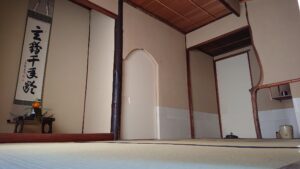
After Rikyu Sen’s death, once the Sen’s family was banned. However many of daimyos who used to admire Rikyu have asked Hideyoshi to rerive Sen’s family, thus Sen’s family was reunited.
Sen the third, Soutan, had many sons and daughters. 3 of his son, Soushu, Sousa, and Soushitsu have taken over Rikyu’s faith and theory of tea ceremony, they started their each own style tea ceremony.
Second son, Soushu, have took over as Mushakouji Senke family. Third son, Sousa, have taken over as Omote Senke family. And forth son, Soushitsu, have taken over as Ura Senke family. These families became origins of three Sen’s family (Senke). Aproximatery 120 to 130 years after Rikyu’s death, each families’ 7th successors have started their own schools as Mushakouji Senke, Omote Senke, Ura Senke.
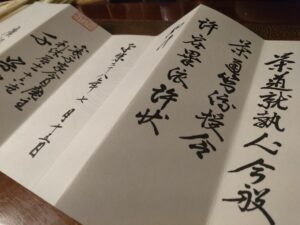
No schools means everybody are able to correct their own disciples as they want. Since the beggining of Edo period, many daimyos started to correct disciples, and they became more popular than Sen families. To retrive Sen families again, 3 heads of families decided to start their own schools, then iemoto (head of school) system and license system had started.
3 Sen families have retrived by those systems, and the time passes to the end of Edo period.
Curtural destruction of Japan
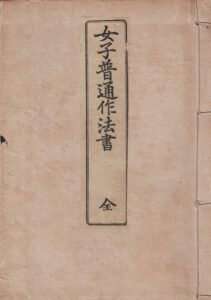
Coup d’état was succeed by Chou-shu and Satsuma domains, Edo period was ended and Meiji Era was started as democratic Era. Meiji government had started to ban many traditional cultures because to out of Asia and into Europe such like katana (sword) prohibition and abolish Buddhism. To abolish Buddhism, many temples were destroyed, even famous statues of Buddha were put into incinerators, they were about to burnt.
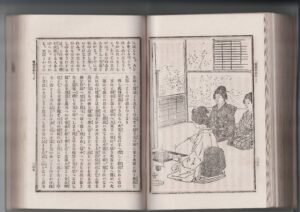
Not only them, tea ceremony were on the verge of same situation, schools of tea ceremony was about to banned. But there was a wisdom by Ura Senke 11th Gengensai, he claimed to Meiji government to keep tea cremony as ladies manner education. Most of ladies didn’t know manners as Europian ladies do, Japanese ladies should be evaluated as they would go out to overseas unless they have own good manners. This idea helped 3 Senke tea ceremony schools from the ban.
However abolition of the domainssystem and establishment of prefectures had effected to the other schools as they lost patrons, only 3 Senke were survibed by Meiji government. This happening became the paradime shift of tea cremony. Tea ceremony used to be gentleman’s culture, but it transformed ladie’s culture since then.
Ura Senke 13th En-nousai had build his new base on Tokyo. He worked hard to get backup from many financial cliques, and he also tried to get governmental backup. He succeed to put tea ceremony article into ladies text books of girl school, and he created many Ura Senke text books to spread tea ceremony to Japanese ladies society as printing technology progress.
Merits and demerits of today’s tea ceremony
After WWII, ladies’ tea ceremony get stronger as it’s said a bride’s household effects. Ura Senke 14th iemoto Tantan-sai have organized Tankou-kai which spreads iemoto’s teaching all over Japan. One of the contents was ‘Tankou text’ which were iemoto’s teaching texts including pictures. That text was very effective to not only city people who can get newest information easily, but also to countryside which hardly get correct information.
Tea ceremony students reached over 10,000,000 people, it was a bubble. Ura Senke 15th iemoto Houun-sai also choose his way of diffusion of tea ceremony with his faith ‘peacefulness from a cup of matcha’. The effect was so great as it started to become one of Japanese representitive traditional culture and even spread to overseas. Beside the number of students gaind so much, detoriorate of quality is unavoidable.
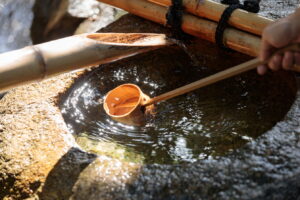
Nowadays, most of people don’t know about relationships between Douyo Sasaki or Soujun Ikkyu, even they mostly interested in お点前 otemae, manners and forms) and tea wares instead of the sense of Wabi. Ofcourse quality of tea cremony decreases. We can find no real Wabi tea cremony which is investigated by Rikyu or Juko, but just a learning method of each schools.
The experience contents represents these day’s tea ceremony as it’s held by not enough experienced students. Even we can find unbelievable tea ceremony experience contents which says ‘inexperienced people can be the teacher of tea ceremony’ in their advertising. This means they don’t have any respects to tea ceremony and customers at all; this is NOT tea cremony.
Increacing numbers of tea cremony students was succeed and it was big achievement in a sense. However the quality couldn’t be maintained, so it is difficult to say a great success.
Tea ceremony that should be
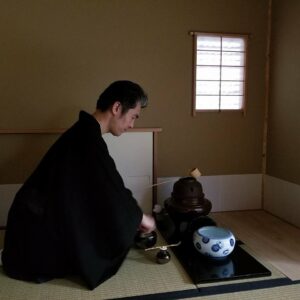
It is talked about the history of tea ceremony for this long, but those are just a piece of its long history and tradition even we can write so many books about it to understand tea ceremony. Eventhough tea ceremony has very one consistent thing; matcha, the TEA itself.
Tea ceremony is named as TEA ceremony, so it can’t be said ‘it was a success of tea ceremony’ if the tea tastes bad. Unfortunately most of tea ceremony students are not interested in how to make matcha good even they call themself 茶人 (chajin, the tea master). They even don’t pay respects to tea, and it is unbelievable tragedy.
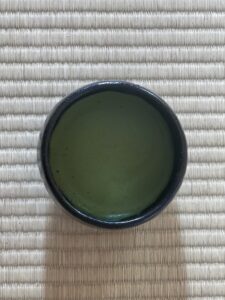
We, CHABITO, believe that real tea master must visit tea farmers and talk about how to plant and grow good tea plants. Ofcourse we study very hard about how to make tea good and understand the spirit of tea. Our everyday training is done only for make tea good and treat customers well.
The potential of tea is endless deep. To draw out whole potential of tea every time, we train ourselves. Each tea wares are put for let customers concentrate to matcha, so those are choosen as they don’t bother customer’s mind who are enjoying matcha to their heart contents. Eventhough we choose tea wares very carefuly to pay our best respect to our wonderful customers like 200 years old 茶碗 (chawan, tea bowl), 600 years old 水指 (Mizusashi, water pot), 400 years old 茶器 (chaki, tea caddy) and so on.
You will feel the real history and real Zen from our Chaji, The best remarkable memorial experience is waiting for you to come. Do not hesitate to contact us, any questions or orders.
茶人CHABITO Representitive
Sougo Kobayakawa